What Is Complex Trauma? When It's More Than One Bad Memory
Some trauma has a clear shape. One event, one date, one before-and-after. Other trauma doesn't work that way, it's less a single memory and more a climate you grew up or lived inside, for months or years, made up of dozens of moments that individually might not even sound that dramatic out loud.
If you've ever struggled to answer “what happened to you” with a single story, complex trauma might be the more accurate frame.

What Is Complex Trauma, Exactly?
Complex trauma refers to exposure to multiple, often prolonged, traumatic experiences, typically interpersonal in nature, rather than a single distressing event. I've covered the broader picture of trauma and its types here; this post goes deeper specifically on the complex end of that spectrum.
It's less about a single event and more about repeated exposure, often starting early in life, often within relationships that were supposed to be safe. That repetition is what shapes complex trauma's effects differently than a single-incident trauma does.
Complex PTSD (C-PTSD)
Clinical diagnosis, ICD-11
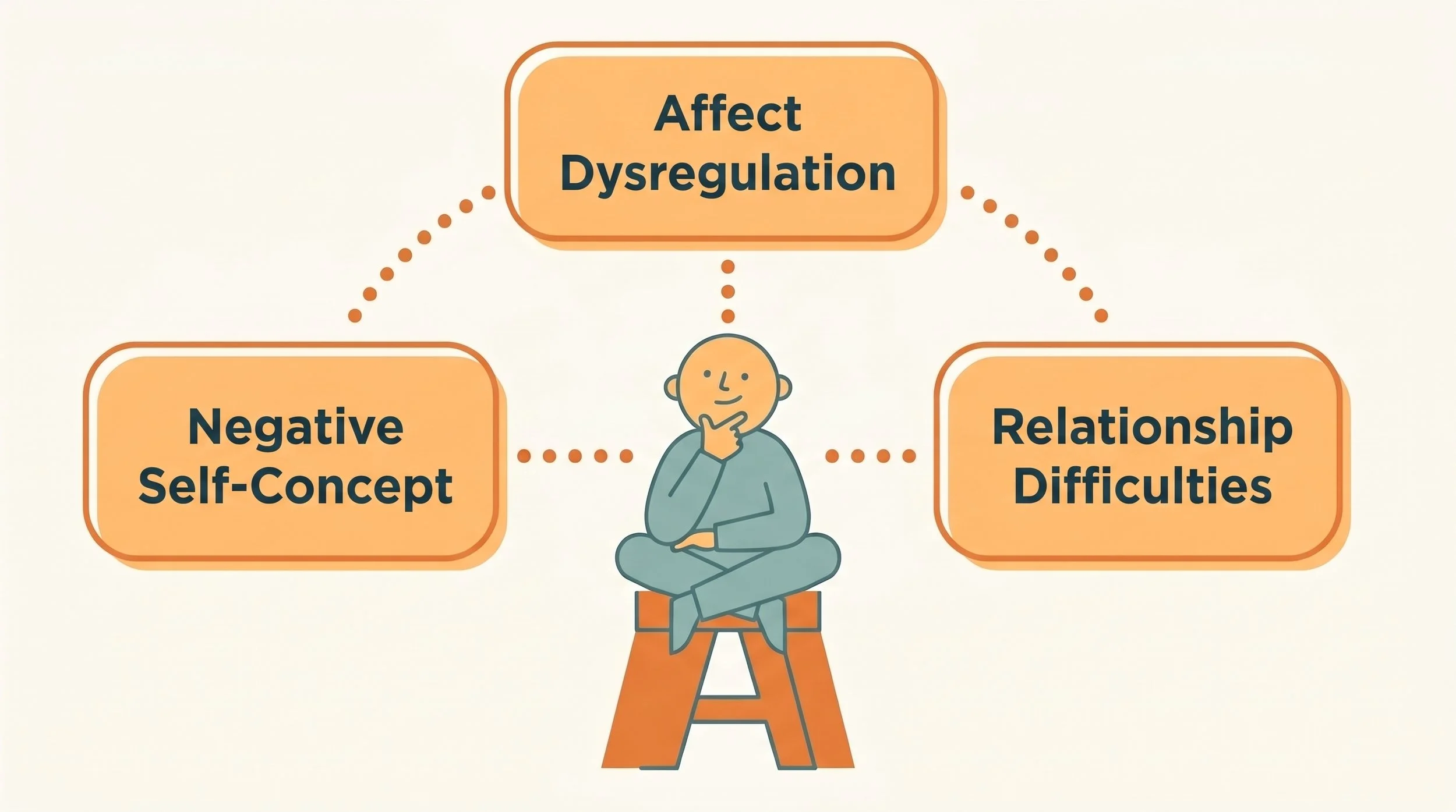
A diagnosis recognized by the World Health Organization's ICD-11 (2018) that includes all core PTSD symptoms, plus three additional symptom areas: difficulty regulating emotions, a persistently negative self-concept, and ongoing difficulty in relationships.
The Three Additional Symptom Areas in Complex Trauma
What sets Complex PTSD apart from standard PTSD, according to the ICD-11 criteria, comes down to three additional areas:
Affect Dysregulation
Difficulty managing emotional reactions, whether that's frequent overwhelm, emotional numbness, or swinging between the two.
Negative Self-Concept
A persistent sense of being worthless, damaged, or fundamentally flawed, not tied to one specific memory but to an overall sense of self.
Relationship Difficulties
Ongoing trouble feeling close to others, trusting people, or maintaining relationships, often rooted in what relationships taught you early on.
What Causes Complex Trauma?
Complex trauma typically develops from repeated or prolonged exposure to distressing circumstances, most often within relationships where a person depended on their caregiver or partner for safety. This overlaps closely with what I've written about childhood trauma and family trauma, since prolonged relational trauma very often begins in childhood, though it isn't limited to childhood alone. Ongoing domestic violence, prolonged captivity, or extended periods of instability in adulthood can create the same pattern.
Is Complex Trauma Just “Having a Lot of Trauma”?
Not exactly, and this distinction matters. Complex trauma isn't primarily defined by the number of difficult things that happened to you. It's defined by the relational, prolonged nature of the exposure, and by the specific pattern of symptoms it tends to produce, particularly around self-concept and relationships.
Someone could experience several unrelated single-incident traumas and not develop the self-concept and relational symptoms that characterize complex trauma. Someone else could experience one prolonged relational situation and develop the full picture. It's about the nature of the exposure, not just the tally.
How Common Is Complex Trauma?
Research using the newer ICD-11 criteria is still developing, but early studies give a useful picture:
2018
year the WHO's ICD-11 first defined Complex PTSD
3
additional symptom clusters beyond core PTSD
21%
C-PTSD rate found in one study of prolonged childhood abuse survivors
That last figure comes from a study of adult survivors of childhood institutional abuse, and rates vary considerably depending on the population studied. The pattern that holds across studies: rates of complex presentations rise specifically among people with prolonged, relational trauma histories.
How Therapy Helps With Complex Trauma
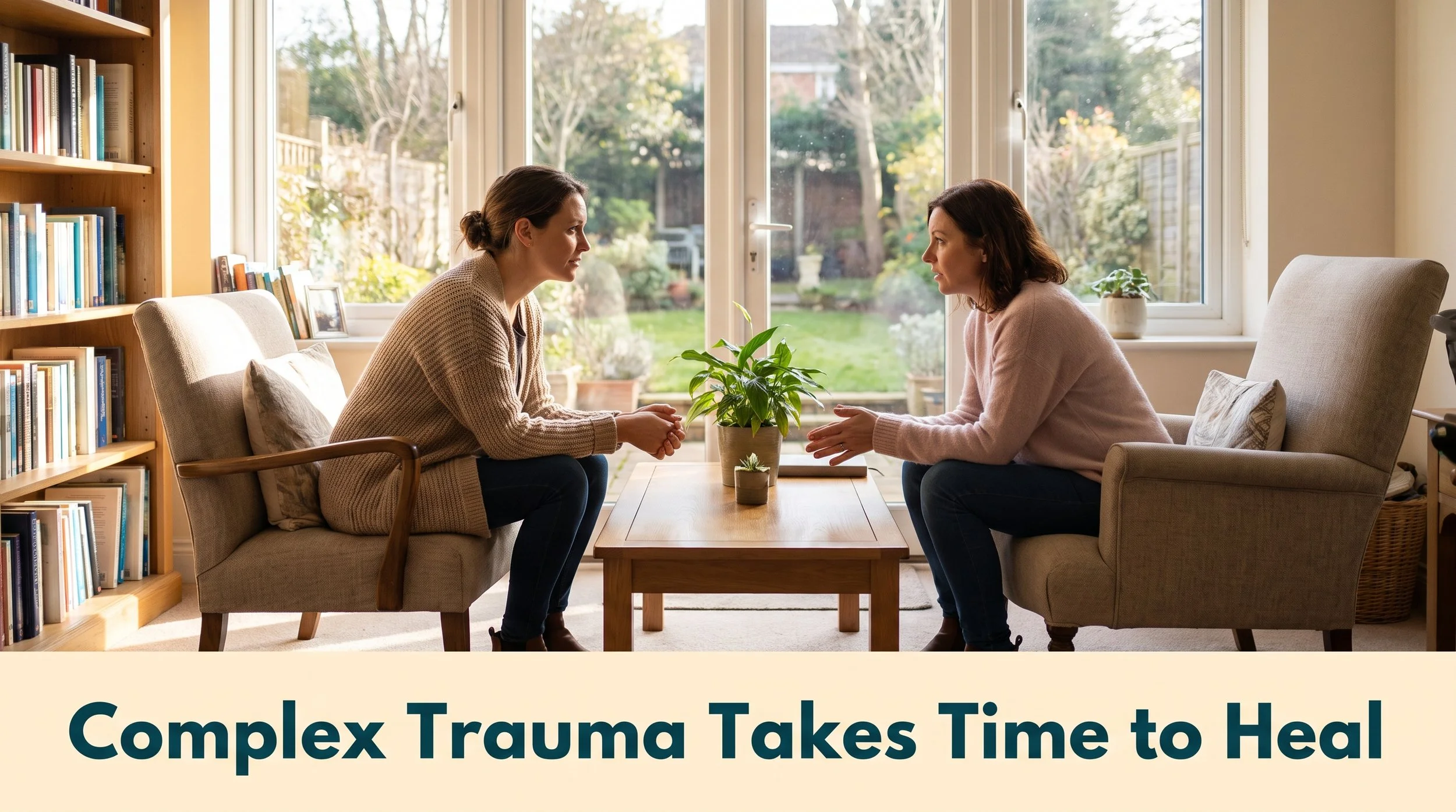
Complex trauma often takes more than addressing a single memory. Because it affects self-concept and relational patterns as well as specific memories, treatment often needs to address multiple layers, not just one distressing event.
EMDR and Brainspotting can absolutely be part of this work, and often need to move at a different pace than they would for single-incident trauma, building safety and stability alongside memory processing rather than jumping straight into the most difficult material. At Hello Calm Therapy, this is exactly what a longer, structured EMDR intensive is built to accommodate.
The Short Version
Complex trauma involves multiple, often prolonged, typically interpersonal traumatic experiences
The ICD-11 (2018) recognizes Complex PTSD as PTSD plus three additional symptom areas: affect dysregulation, negative self-concept, and relationship difficulties
It's defined by the nature of the exposure, not simply the number of difficult events
Treatment often needs to build safety and stability alongside memory processing, rather than rushing straight into it
Frequently Asked Questions About Complex Trauma
What is the difference between trauma and complex trauma?
Trauma can result from a single event. Complex trauma results from multiple, often prolonged, typically interpersonal traumatic experiences, and tends to affect self-concept and relationships more broadly.
Is Complex PTSD an official diagnosis?
Yes, in the ICD-11, the diagnostic system published by the World Health Organization. It is not currently a separate formal diagnosis in the DSM-5, though the DSM-5 describes related features under PTSD.
What are the main symptoms of complex trauma?
In addition to core PTSD symptoms, Complex PTSD includes difficulty regulating emotions, a persistently negative self-concept, and ongoing difficulty in relationships.
Can complex trauma be treated?
Yes. Treatment often addresses safety and emotional regulation alongside trauma processing, using approaches like EMDR and Brainspotting, typically at a more gradual pace than single-incident trauma treatment.
Does complex trauma always come from childhood?
Often, but not always. While childhood relational trauma is a common cause, prolonged trauma in adulthood, such as domestic violence or extended instability, can also produce a complex trauma presentation.
Ready to Address the Full Picture, Not Just One Memory?
You don't need a single, clean story of what happened to you to deserve support. Complex trauma often doesn't come with one.
I'm Hannah Ciampini, LCSW, owner of Hello Calm Therapy in Pensacola, Florida. I specialize in focused EMDR and Brainspotting intensive therapy for adults working through childhood trauma, complex trauma, anxiety, medical trauma, religious trauma, and patterns that still feel stuck despite insight or previous therapy.
I offer in-person intensives in Pensacola as well as virtual intensive therapy for clients located in Florida and Alabama. Clients may also travel to Pensacola for focused intensive work.

About the Author
Hannah Ciampini, LCSW is a trauma therapist and owner of Hello Calm Therapy in Pensacola, Florida. She specializes in EMDR and Brainspotting intensive therapy for adults working through childhood trauma, complex trauma, anxiety, medical trauma, religious trauma, and patterns that continue to feel stuck despite previous therapy or insight.
Hannah provides in-person EMDR and Brainspotting intensives in Pensacola and virtual intensive therapy for clients located in Florida and Alabama. She also works with clients who travel to Pensacola for focused intensive trauma therapy.