Why Do I Cry So Easily? Trauma, Stress, and Emotional Overload Explained

This is a question I hear often in the therapy room.
Sometimes it sounds like:
"I don't know what's wrong with me lately."
"I cry at everything."
"I feel like my emotions are right at the surface all the time."
"I used to be able to handle things better."
For some people, the tears show up during an argument with a partner. For others, it's during a stressful work meeting, while talking about something seemingly small in therapy, or even while watching a commercial they normally wouldn't think twice about.
The frustrating part is that many people assume the crying itself is the problem.
What I often find is that the tears are not actually the problem.
They're a clue letting you know somethings up.
They're your nervous system's way of telling you that something deeper may be asking for attention.
When people have been carrying stress, anxiety, grief, burnout, trauma, or emotional responsibility for a very long time, emotions don't simply disappear. Eventually they tend to find a way to come out somewhere.
Sometimes that place is through tears. Sometimes there have been other “warnings” that something was up for awhile and tears are just the thing we tend to pay more attention to.
Sometimes the Tears Aren't About What's Happening Right Now
One of the biggest misconceptions about emotional overwhelm is that people assume they are reacting too strongly to the situation in front of them.
A client might tell me:
"I started crying because of a work email."
Or:
"I cried because my spouse asked what I wanted for dinner."
The email isn't really the issue.
The dinner question isn't really the issue.
More often, those moments are simply where everything that has been building finally spills over.
Your nervous system doesn't separate stress into neat little categories.
It doesn't decide which stress counts and which stress doesn't.
If you've spent months or years carrying anxiety, pushing through burnout, navigating difficult relationships, managing chronic health concerns, grieving losses, or surviving experiences that never fully got processed, eventually your emotional capacity gets stretched thin.
When that happens, something relatively small can suddenly feel much bigger than it would have otherwise.
Why High-Functioning Adults Often Start Crying More
Many of the adults I work with are incredibly capable, high functioning people.
They're professionals, business owners, parents, caregivers, healthcare workers, and people others rely on every day.
From the outside, they often appear calm, competent, and successful.
Internally, however, many are carrying far more than anyone realizes.
For years they have learned how to keep going regardless of how stressed, overwhelmed, exhausted, or emotionally depleted they feel and eventually the nervous system reaches a point where it can no longer keep everything neatly contained.
Sometimes that shows up as anxiety, burnout or feeling emotionally numb.
And sometimes it shows up as crying much more easily than you used to, even over things that “don’t seem that big”.
That does not mean you're falling apart.
It may simply mean your nervous system has been working overtime for a very long time. Think of it like the lights on a dash board. When something lights up, it means your car needs some attention, something is up. If we ignore that light… more issues with the car may start to pop us as well. Same for you nervous system and your body; If you ignore the first signal that something’s wrong, other signals may start popping off as well, and it may be in the most inconvenient times.
Trauma Can Make Emotions Feel Closer to the Surface
When people think about trauma, they often imagine flashbacks or obvious memories.
Trauma is often much more subtle than that.
Trauma can affect how safe your nervous system feels on a daily basis.
Even when life is relatively stable now, your brain and body may still be carrying patterns that developed during difficult experiences.
When the nervous system spends enough time in survival mode, emotional reactions can become more intense.
This doesn't mean you're weak, dramatic or overreacting.
It often means your nervous system is carrying more than it currently has capacity to process, your “cup is full”, as they say.

Burnout Can Look More Emotional Than Physical
When most people think about burnout, they picture exhaustion.
While fatigue is certainly part of burnout, emotional symptoms are often just as significant.
Many people experiencing burnout notice:
Increased tearfulness
Feeling overwhelmed more easily
Irritability
Emotional exhaustion
Difficulty recovering from stress
Feeling emotionally flooded by situations that previously felt manageable
This is especially common among people who have spent years prioritizing everyone else's needs while ignoring their own.
Eventually the emotional system starts asking for attention (with some flashing neon signs, in some ways).
What If I've Always Been Sensitive?
Some people naturally experience emotions more deeply than others.
Sensitivity itself is not a problem.
In fact, sensitivity can be associated with empathy, insight, creativity, and emotional awareness.
The question is not whether you're sensitive.
The question is whether your nervous system feels overloaded.
When emotional sensitivity is combined with chronic stress, trauma, grief, burnout, anxiety, or unresolved experiences, emotions often become much harder to regulate.
This is why many people describe feeling as though they are "crying over everything" when in reality their nervous system is simply carrying too much.
Can Therapy Help?
Many people come to therapy hoping to stop crying or “being too sensitive”.
What we often discover together is that the goal isn't necessarily to stop the tears.
The goal is to understand what the tears are trying to communicate.
When the underlying stress, trauma, grief, burnout, or emotional burden begins to heal, many people naturally find that their emotional system feels more balanced.
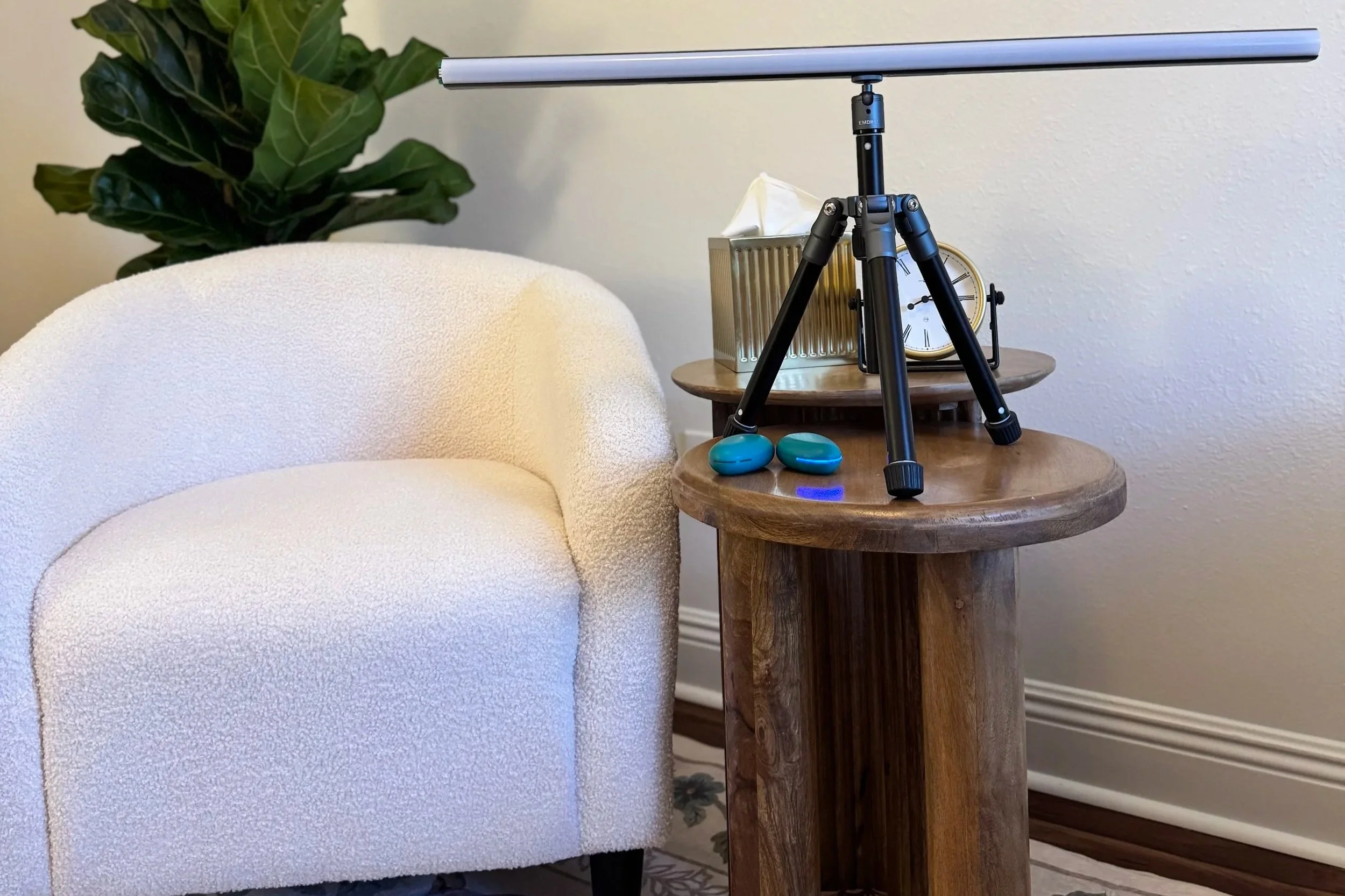
Approaches such as EMDR and Brainspotting can help individuals process unresolved experiences that may still be contributing to emotional overwhelm and nervous system dysregulation.
As healing occurs, many people notice:
Greater emotional stability
Reduced anxiety
Improved resilience
Less overwhelm
Better stress management
Increased capacity to handle life's challenges
When Weekly Therapy Doesn't Feel Like Enough
Many adults who struggle with emotional overwhelm already understand where their stress comes from.
They can explain their childhood experiences.
They can identify relationship patterns.
They know why they feel the way they do.
Yet despite all of that insight, the emotional reactions remain.
This is one reason some individuals choose EMDR Intensives or Brainspotting Intensives.
Rather than spreading the work across months of weekly sessions, intensive therapy allows dedicated time to focus on the underlying experiences and nervous system patterns that may still be contributing to emotional overload.
Many clients travel to Pensacola from throughout Florida, Alabama, and other states because they are looking for a focused approach that creates meaningful momentum in healing. You can absolute travel down to see me in Florida if you are not currently in the area, reach out to me to talk more about this!
Crying Does Not Mean Something Is Wrong With You
Tears are often one of the ways the nervous system communicates that it has been carrying more than it can comfortably hold.
Sometimes those tears are connected to grief.
Sometimes they're connected to stress.
Sometimes they're connected to trauma, burnout, or years of putting everyone else's needs ahead of your own.
Whatever the reason, crying more easily does not automatically mean you're too emotional or too sensitive.
It may simply be a sign that your mind and body are asking for care, attention, and support.
Understanding what is underneath those emotions can be an important step toward feeling more regulated, grounded, and connected to yourself.
Ready to Learn More?
At Hello Calm Therapy, I provide EMDR Intensives and Brainspotting Intensives for adults throughout Florida and Alabama, as well as those traveling to Pensacola for focused trauma treatment.
If emotional overwhelm, tearfulness, anxiety, or chronic stress have become difficult to manage, a consultation can help determine whether an intensive may be a good fit.
Frequently Asked Questions
Why do I cry so easily?
Frequent crying can be influenced by trauma, chronic stress, burnout, grief, anxiety, hormonal changes, and nervous system overload. Often the tears reflect accumulated emotional stress rather than a single event.
Can trauma make you cry more easily?
Yes. Trauma can increase emotional sensitivity and make the nervous system more reactive to stress, causing emotions to feel closer to the surface.
Is crying a sign of emotional weakness?
No. Crying is a normal emotional response and often reflects the nervous system attempting to process stress, overwhelm, grief, or difficult experiences.
Can burnout cause frequent crying?
Yes. Burnout often affects emotional regulation and can increase tearfulness, overwhelm, irritability, and emotional exhaustion.
Can EMDR help with emotional overwhelm?
EMDR can help individuals process unresolved experiences that may be contributing to chronic stress, anxiety, emotional flooding, and nervous system dysregulation.

About the Author
Hannah Ciampini, LCSW, is a licensed clinical social worker and trauma therapist based in Pensacola, Florida. She specializes in EMDR Intensives and Brainspotting Intensives for adults navigating trauma, anxiety, burnout, chronic stress, religious trauma, emotional overwhelm, and nervous system dysregulation.
Through her intensive therapy model, Hannah helps clients move beyond simply understanding their patterns and begin addressing the underlying experiences that continue to shape how they feel, respond, and relate to themselves and others. She works with adults throughout Florida and Alabama, as well as those who travel to Pensacola seeking a focused and personalized approach to trauma healing.
Learn more about EMDR Intensives, Brainspotting, and trauma therapy at Hello Calm Therapy Services.
Ready To Reach Out?
Fill out the form below and Hannah Ciampini will reach out within 48 business hours.