Brainspotting vs. EMDR: what's the difference, and which one is right for you? If you've been searching for trauma therapy, you've probably run into both names, and maybe you've wondered if you're supposed to pick one before you even call anyone. I get this question all the time, and I offer both, so I'm happy to give you a straight answer.
Here's the short version. Both are trauma therapies that work with your brain and body, not just your thoughts, and both can help you process things that talking alone hasn't touched. The biggest differences are how structured the session is, how the target for the work gets chosen, and how much research sits behind each one. You don't have to figure it all out before you start, and you're not making a permanent choice.
The Quick Version
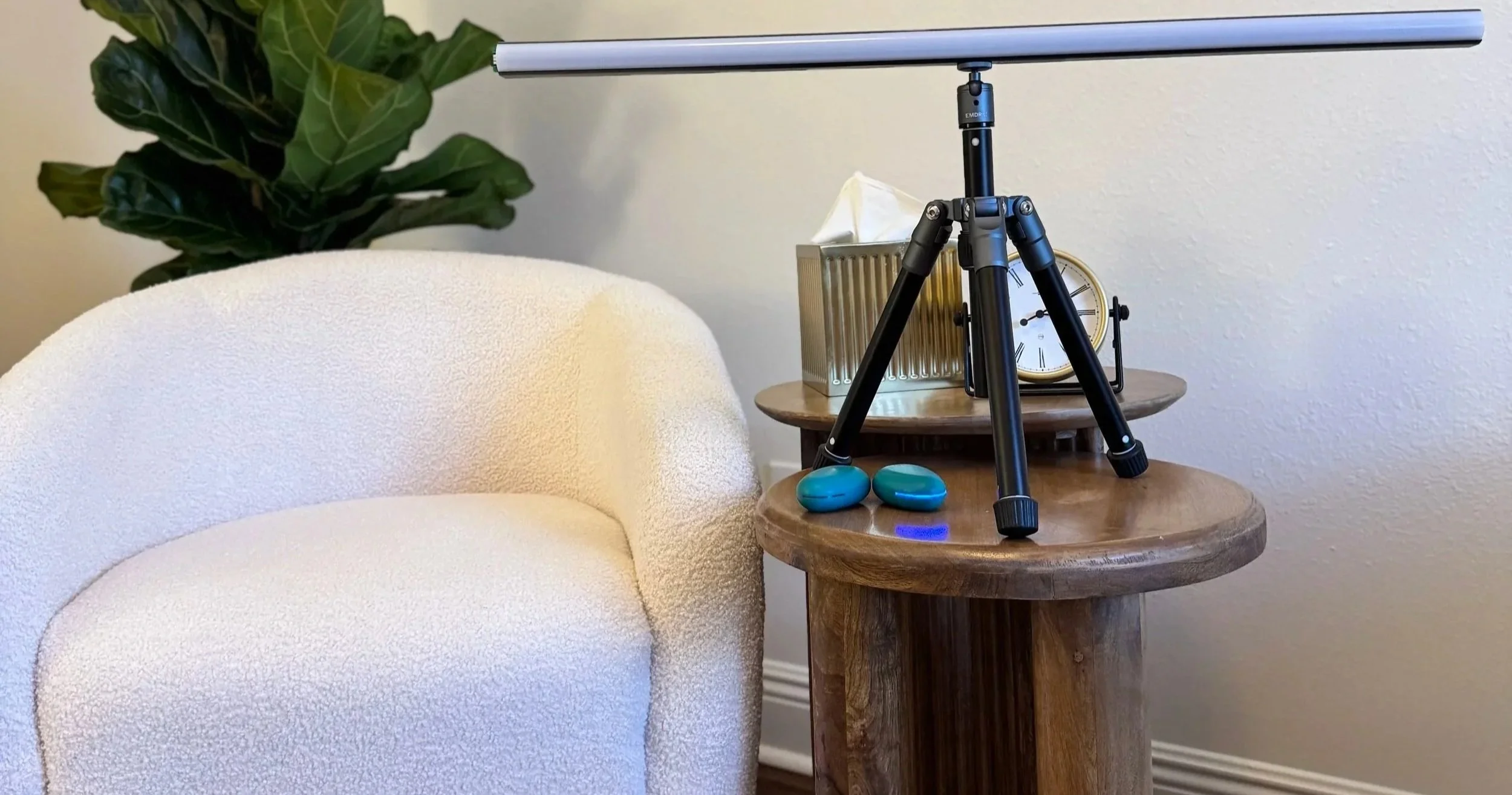
EMDR is a structured, step-by-step therapy that uses bilateral stimulation, like guided eye movements or taps, while you focus on a specific distressing memory. Brainspotting is a more open, body-led approach where you hold your gaze on a specific eye position that connects to where a feeling lives in your body, and you let your brain do the processing from there.
If EMDR is like following a map with clear stops, Brainspotting is more like following a trail one step at a time and letting the path show itself. Neither is better in every case. They just ask different things of you and the therapist.
Where Each One Came From
EMDR was developed in the late 1980s by psychologist Francine Shapiro, who noticed that moving her eyes side to side seemed to ease distressing thoughts. It grew into an eight-phase therapy, and the EMDR International Association describes it as moving from history-taking and preparation through reprocessing and closure.
Brainspotting came later. It was developed by David Grand in the early 2000s, reportedly after he noticed during an EMDR session that a client's eye position seemed tied to a strong emotional reaction. He built an approach around that idea, and you can read how the community describes it at brainspotting.com. So the two are related, and many therapists who use one have training in the other.
What an EMDR Session Looks Like
EMDR follows a clear protocol. We start by getting to know your history and building skills so you have ways to steady yourself. Then we choose a target memory, notice the image, the belief that goes with it (like "I'm not safe"), and where you feel it in your body. While you think about that, I guide bilateral stimulation, and we pause now and then so you can tell me what you're noticing.
The structure is a strength for a lot of people. You know what the steps are, there's a built-in way to check progress, and the work is organized around specific memories and beliefs. You also don't have to retell every painful detail. The VA's National Center for PTSD notes that clients generally aren't required to describe the trauma in detail during EMDR.
What a Brainspotting Session Looks Like
Brainspotting usually feels quieter. You notice a sensation or feeling in your body, rate how strong it is, and then we find an eye position that seems to connect to it. You hold your gaze there, often with calming music or bilateral sound, and you simply notice what comes up. There's a lot of silence, and I mostly stay present and tuned in with you.
It's less about reviewing a specific memory and more about following what your body is doing. Some people find that freeing, especially if they struggle to put things into words or don't have clear memories to start from. Others find the openness harder, because there's less of a roadmap.
The Differences That Matter in the Room
If you strip away the details, a few contrasts tend to stand out:
Structure. EMDR follows set phases and a clear sequence. Brainspotting is more flexible and follows your body's lead.
How we choose the target. EMDR usually starts with a specific memory and the belief attached to it. Brainspotting usually starts with a felt sense in your body and the eye position that connects to it.
How much talking happens. EMDR includes brief check-ins throughout. Brainspotting often has longer stretches of quiet.
The role of your eyes. In EMDR, your eyes (or taps, or sounds) move back and forth. In Brainspotting, your eyes rest on one fixed point.
The pace. Some people find EMDR's momentum energizing. Others prefer Brainspotting's slower, steadier feel.
What They Have in Common
It's worth saying that these two share a lot of ground. Both work with the body as well as the mind, which is why people who feel stuck after years of talk therapy often find them helpful. Both can reach experiences you may not have words for. Both are built on a relationship where you feel safe enough to go there, and both let you move at a pace you can handle.
If you're curious about the body-based side of trauma work more broadly, I wrote about it in my post on somatic therapy and how trauma gets stored in the body. And if you're weighing EMDR against a different kind of approach, my comparison of IFS therapy vs. EMDR covers that.
An Honest Word About the Research
I want to be straightforward here, because it matters. EMDR has a large body of research behind it, particularly for PTSD, and is recommended by major health organizations. Brainspotting is newer, and the research is much smaller. There are some early studies with encouraging results, but it hasn't been studied nearly as much, and I don't want to oversell it.
That doesn't mean Brainspotting doesn't help people. Many clients tell me it reaches places nothing else had. It means the evidence is still catching up, and you should know that going in. If you want the most researched option for PTSD, EMDR is the stronger choice on paper. If you've tried it and felt stuck, or you prefer a slower, body-led approach, Brainspotting may be worth a look.
Who Might Lean Toward Which
I can't pick for you, and a good assessment matters more than any rule of thumb. But here's how I often think about it:
You might lean toward EMDR if you like structure, have specific memories you want to work on, or want the approach with the strongest research behind it.
You might lean toward Brainspotting if you feel overwhelmed by talking, notice more in your body than in your thoughts, or have felt stuck even after other therapy.
You might want a mix if some parts of your story are clear and others are only a feeling in your chest or stomach.
If you're not sure, that's completely okay. Plenty of people aren't, and you don't have to be. We can talk about it before anything starts.
Do You Have to Choose?
Not always. I offer both EMDR and Brainspotting, and sometimes we use each one at different points in the work. I might start with EMDR when there's a clear memory to target, then shift to Brainspotting if something is held in the body and doesn't have words. That flexibility is one reason I like working with both.
It's also why many of my clients choose a focused format. I offer weekly sessions and EMDR and Brainspotting intensives, where we spend a longer block of time on the work, in person in Pensacola and virtually across Florida and Alabama.
Questions to Ask Any Therapist Before You Start
What training do you have in this approach, and how long have you used it?
How will you decide whether it's a good fit for me?
What will the first few sessions look like, and how do you help me feel stable?
How do you handle it if something feels like too much?
A good therapist will welcome those questions. If you feel rushed or dismissed when you ask them, trust that too.

You Don't Have to Decide Alone
If you've read this far, you're taking your healing seriously, and that matters. You don't need to walk in knowing which one is right. I'll listen to what you've been through, what you've tried, and what you're hoping for, and we'll figure out a fit together. No pressure. Just clarity. I'm here to help along the way!
About the Author

Hannah Ciampini, LCSW, is a trauma therapist and owner of Hello Calm Therapy in Pensacola, Florida, and she specializes in EMDR and Brainspotting intensive therapy for adults working through childhood trauma, anxiety, and patterns that continue to feel stuck despite previous therapy or insight. Hannah offers in-person EMDR intensives in Pensacola and virtual intensive therapy for clients located in Florida and Alabama.