Why Do I Feel Numb Instead of Sad?
Why do I feel numb instead of sad? Something happens that should hurt, like a breakup, a loss, bad news, or a conversation that would normally wreck you, and instead of tears or grief, there's just... nothing. Flat. Like you're watching your own life from a few feet outside it. And then comes the second wave of distress: wondering what's wrong with you for not feeling anything at all.
If that's where you are right now, I want to say this clearly before we go any further. Numbness is not the absence of feeling. It's not coldness, and it's not proof that you don't care. Very often, it's the opposite. It's your nervous system's way of protecting you from feeling something that, at some point, felt like too much to survive.
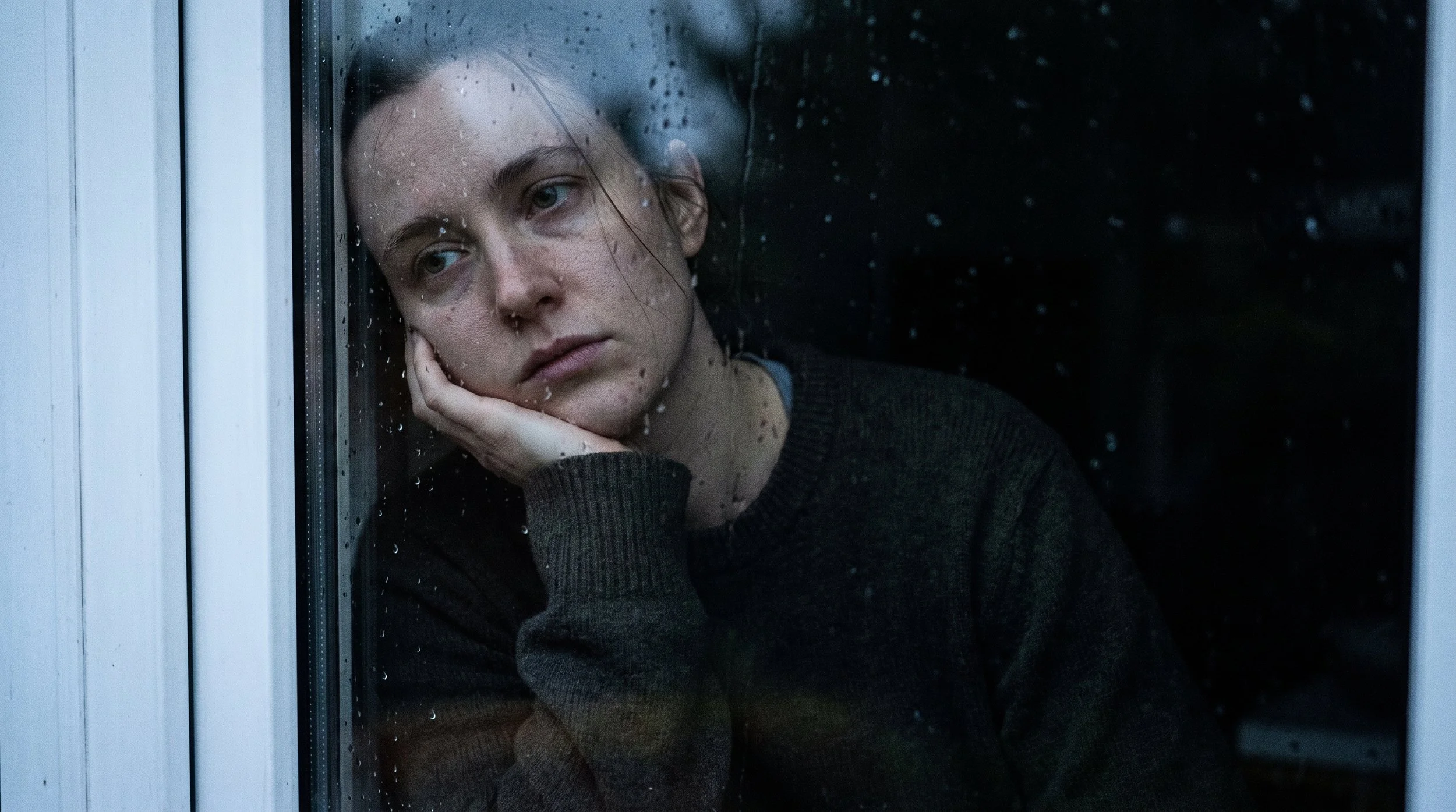
You're Not Broken. You're Not Making This Up.
Clients describe this to me in a lot of different ways. "I know I should be devastated, but I just feel blank." "I can't cry even when I want to." "I feel like I'm watching my own life happen instead of living it." "Everyone around me is upset and I feel nothing, and that scares me more than the actual situation does."
If any of that sounds familiar, you're not cold, and you're not broken. This is one of the most common and most misunderstood trauma responses out there, and it has a name and a real explanation behind it.
What's Actually Happening in Your Body When You Go Numb
Psychiatrist and researcher Dr. Bessel van der Kolk, author of The Body Keeps the Score, writes extensively about how the nervous system responds to overwhelming experiences with more than just fight or flight. When a threat feels inescapable, or when emotion becomes too intense to safely process in the moment, the body has a third option: shutting down. This is sometimes called the freeze or shutdown response, and it's governed by what polyvagal theory researcher Dr. Stephen Porges calls the dorsal vagal system, the oldest part of your nervous system, designed to protect you by disconnecting you from what's happening when nothing else feels possible.
Numbness is that system doing its job. It muted the feeling because, at some point, the feeling was more than your system could safely hold. The problem is that once this pattern gets wired in, it doesn't always wait for a true emergency to activate. It can show up during a normal sad moment, a hard conversation, or even good news, long after the original overwhelming situation is over.
Therapist and Clinical Researcher Judith Herman Calls This a Survival Skill, Not a Flaw
In her landmark book Trauma and Recovery, psychiatrist Dr. Judith Herman describes numbing and dissociation as adaptive responses that helped people survive overwhelming events, particularly when those events happened repeatedly or over a long period of time, as with childhood trauma or ongoing stress. The nervous system essentially learns, "feeling less keeps us safer," and it applies that lesson long after the danger has passed.
This is why numbness so often shows up in people who grew up having to manage a chaotic or unpredictable home, who went through a prolonged difficult period, or who experienced something so overwhelming that fully feeling it in the moment wasn't possible. It's not weakness. It's a nervous system that learned to protect you the only way it knew how.

How This Tends to Show Up Day to Day
Feeling like you're watching your own life instead of living inside it
Not being able to cry even during moments that clearly call for it
Going through the motions of a hard day and only feeling the weight of it much later, if at all
Feeling disconnected from your own body, like it's on autopilot
Struggling to answer "how do you feel about that" with anything more specific than "fine" or "I don't know"
Wondering if you're a bad or cold person because your reaction doesn't match what feels like an appropriate response
If you recognize several of these, you're not alone, and this is far more common than most people realize. It just tends to stay hidden because numbness, by its nature, doesn't announce itself the way anxiety or panic does.
This Isn't the Same as Not Caring, and It Isn't the Same as Depression Either
It's worth separating this from a couple of things it sometimes gets confused with. Numbness driven by a protective nervous system response is different from simply not caring. People who go numb are very often the ones who feel things the most intensely underneath, which is part of why the system stepped in to mute it. It can also overlap with depression, which often includes its own kind of flatness, but the underlying mechanism is different. Depression tends to involve low mood and low energy more broadly, while trauma-related numbness is more specifically your nervous system disconnecting you from a particular category of overwhelming feeling. Sorting out which one, or both, is happening is something a trauma-informed clinician can help you untangle.
When It Might Be More Than Just a Hard Week
A little numbness after an exhausting stretch is normal and usually passes. It's worth paying closer attention if you notice this becoming your default response, if it's affecting your relationships because people around you keep saying you seem "checked out," if you can't access sadness, joy, or connection even in situations that used to bring those feelings easily, or if you find yourself dissociating in smaller ways throughout an ordinary day, like losing time or feeling foggy without an obvious trigger.

Why This Can Be Confusing for the People Around You Too
One of the hardest parts of living with this pattern is what it does to your relationships. A partner or friend might see you not crying at a funeral, or responding to hard news with a shrug, and quietly wonder if you're being cold or if you even care. They usually have no way of knowing that underneath that flat exterior, your system is working overtime to keep a much bigger feeling contained.
This can create a painful loop. You feel numb, people around you misread the numbness as indifference, and then you're left managing both the original overwhelm and the sting of being misunderstood by people who love you. If this sounds familiar, it can help to say it plainly to the people closest to you: "I care more than it looks like right now. My nervous system just processes things on a delay." It won't fix the pattern by itself, but it can take some of the loneliness out of it.
It's also worth knowing that numbness can show up unevenly. You might feel completely blank about something objectively serious, like a diagnosis or a loss, while still crying at a commercial or getting unexpectedly emotional over something small. That's not inconsistency. It's your nervous system letting feeling through wherever it currently feels safe enough to, and staying shut down wherever it doesn't.
Finding Your Way Back to Feeling
The goal in therapy isn't to force feeling back all at once. That can actually overwhelm the same system that shut down to protect you in the first place. Instead, the work is usually slower and more careful than people expect.
EMDR can help reprocess the original overwhelming experiences that trained your nervous system to shut down, so your body no longer needs to rely on that response as often. Somatic and body-based approaches help you gently reconnect with physical sensation at a pace your system can actually tolerate, rather than flooding it. Many trauma therapists also work within what's known as the window of tolerance, a concept introduced by psychiatrist Dr. Dan Siegel, which describes the zone where you can feel emotion without becoming overwhelmed or shutting down. Widening that window, a little at a time, is often the real work.
None of this happens overnight, and it isn't supposed to. Your nervous system took time to learn this pattern, and it deserves patience while it learns something different.
If numbness has been your normal for longer than you'd like to admit, I'd love to help you find your way back to feeling. I offer EMDR intensives, both in person in Pensacola and virtually across Florida and Alabama, for people ready to work with their nervous system instead of feeling stuck outside it.

Hannah Ciampini, LCSW, is a trauma therapist and owner of Hello Calm Therapy in Pensacola, Florida, and she specializes in EMDR and Brainspotting intensive therapy for adults working through childhood trauma, dissociation, anxiety, and experiences that continue to feel stuck despite previous therapy or insight. Hannah offers in-person EMDR intensives in Pensacola and virtual intensive therapy for clients located in Florida and Alabama.